After giving birth, many women begin to wonder how soon they can become pregnant again and which contraceptive method is appropriate during this period.
Some mothers believe that they cannot become pregnant until their menstrual period returns, or that breastfeeding completely prevents pregnancy. However, these beliefs are not always correct.
Ovulation can return before the first menstrual period after childbirth. This means that a woman may become pregnant relatively soon after giving birth if she has unprotected sex.
So, how soon after giving birth can you become pregnant again? When is it appropriate to plan another pregnancy? What contraceptive methods can be used after childbirth, especially while breastfeeding?
Let’s explore what mothers need to know with M.Sc. Dr. Le Nhu Ngoc – Hope Clinic, Da Nang.
How Soon After Giving Birth Can You Become Pregnant Again?

From a biological perspective, fertility can return relatively soon after childbirth.
If a woman is not breastfeeding, ovulation may return within a few weeks. If she is breastfeeding, ovulation may be delayed, but it can still occur before menstruation returns.
This means:Not having your period again does not necessarily mean that you cannot become pregnant.
If you are not planning another pregnancy yet, you should consider an appropriate contraceptive method during the postpartum period rather than waiting for your menstrual cycle to return.
How Long Should You Wait Before Becoming Pregnant Again?
The interval between pregnancies is an important part of reproductive health planning.
ACOG recommends avoiding a new pregnancy within the first 6 months after giving birth and discussing the benefits and risks if pregnancy occurs sooner than 18 months after the previous birth. Many healthcare professionals recommend allowing at least 18 months between pregnancies to give the mother's body more time to recover.
However, the appropriate interval is not exactly the same for every woman.
A doctor may consider:
The mother's age.
Her current health.
How she gave birth previously.
A history of preterm birth or pregnancy complications.
Anemia or nutritional deficiencies.
Chronic medical conditions.
A previous cesarean delivery.
Plans for the next pregnancy.
The family's reproductive goals and circumstances.
Therefore, women should not simply follow the same pregnancy interval as someone else.
Why Should You Avoid Becoming Pregnant Too Soon After Giving Birth?
The body needs time to recover from pregnancy and childbirth.
A short interval between pregnancies may be associated with a higher risk of certain complications for both the mother and baby. ACOG specifically recommends avoiding an interval of less than 6 months between giving birth and becoming pregnant again and recommends counseling about the potential risks and benefits of pregnancy occurring sooner than 18 months.
After childbirth, the mother needs time to:
Recover physically.
Replenish nutritional stores.
Recover from anemia if present.
Allow the uterus and pelvic area to recover.
Stabilize her postpartum health.
Care for and breastfeed her baby.
Prepare more adequately for the next pregnancy.
If you previously had a cesarean delivery, the interval between pregnancies should also be discussed with your doctor, particularly if you are considering a vaginal birth in your next pregnancy.
Can You Become Pregnant Before Your Period Returns?
Yes.
This is one of the most common misconceptions about postpartum contraception.
Ovulation usually occurs before the next menstrual period. Therefore, a woman can ovulate and become pregnant before she notices that her period has returned.
Therefore:No period ≠ no possibility of pregnancy.
If you do not want another pregnancy yet, you should not wait until your period returns before starting contraception.
Can You Become Pregnant While Breastfeeding?
Yes.
Breastfeeding can delay ovulation, but breastfeeding does not automatically prevent pregnancy in every situation.
A method called the Lactational Amenorrhea Method (LAM) may provide temporary contraception when specific conditions are all met, including:
The baby is younger than 6 months.
The mother's menstrual period has not returned.
The baby is exclusively or almost exclusively breastfed.
There are no long intervals between breastfeeding sessions, including during the day and at night.
If all of these conditions are not met, mothers should not rely on breastfeeding alone as their only method of contraception.
What Contraceptive Methods Can Be Used After Giving Birth?
There are several contraceptive options available after childbirth.
Depending on the mother's health, breastfeeding status, and plans for another pregnancy, a doctor may discuss:
Condoms.
Progestin-only birth control pills.
Other hormonal contraceptive methods.
Contraceptive implants.
Intrauterine devices (IUDs).
Injectable contraception.
The Lactational Amenorrhea Method (LAM) when all appropriate conditions are met.
Other contraceptive options suitable for the individual woman.
There is no single contraceptive method that is best for every woman.
How Should Breastfeeding Mothers Choose Contraception?
This is an issue that requires careful consideration.
Some contraceptive methods can be started immediately after childbirth, while others may require consideration of the appropriate timing depending on breastfeeding and the mother's individual health risks.
When discussing postpartum contraception, a doctor may consider:
Whether the mother is breastfeeding.
Breastfeeding and milk supply considerations.
How long it has been since delivery.
A history of blood clots.
Blood pressure.
Underlying medical conditions.
Previous pregnancy and childbirth history.
Plans for another pregnancy.
How soon she may want to become pregnant again.
Therefore, women should not simply purchase contraceptive medication based on someone else's experience.
Are Condoms Suitable for Postpartum Contraception?
Yes.
Condoms are a hormone-free contraceptive option and can also help reduce the risk of sexually transmitted infections.
They may be suitable for couples who want temporary contraception or prefer not to use hormonal methods.
However, contraceptive effectiveness depends greatly on correct and consistent use.
Can You Use an Intrauterine Device (IUD) After Giving Birth?
Yes.
An intrauterine device is a highly effective contraceptive option and can be used during the postpartum period.
Some types can be placed immediately after childbirth in appropriate situations, while other women may choose to have an IUD inserted at a later postpartum visit. The appropriate timing and type should be discussed with a doctor based on the mother's individual condition.
Can You Use a Contraceptive Implant After Giving Birth?
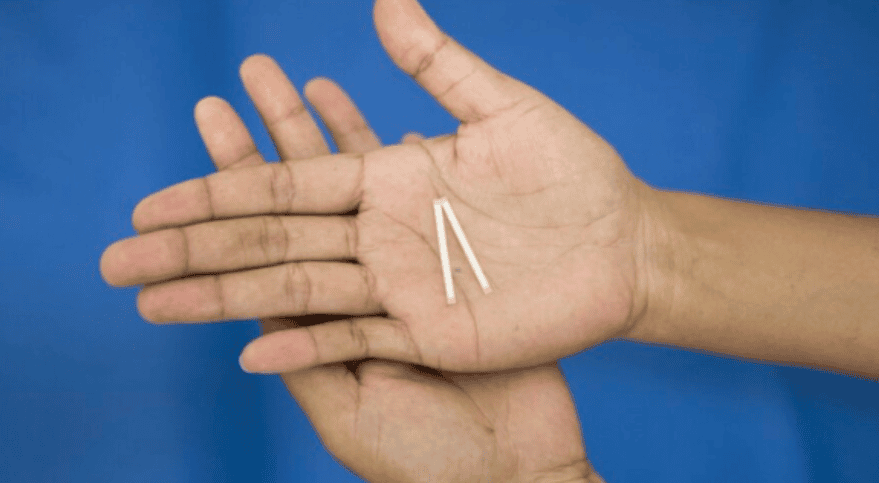
A contraceptive implant is a highly effective option and can be used during the postpartum period.
One advantage is that the mother does not have to remember to take a pill every day.
However, the implant can change menstrual bleeding patterns.
Whether it is appropriate depends on the woman's health, contraceptive needs, and plans for future pregnancies.
Should You Take Birth Control Pills on Your Own After Giving Birth?
It is not recommended to choose contraceptive medication without considering your individual health condition.
This is particularly important for postpartum women who are breastfeeding and may have certain health factors that need to be assessed before choosing some hormonal contraceptive methods.
A doctor may consider:
How long it has been since delivery.
Whether you are breastfeeding.
A history of blood clots.
Blood pressure.
Cardiovascular conditions.
Current medications.
Plans for future pregnancy.
Other individual health factors.
A method that is appropriate for one woman may not necessarily be appropriate for another.
When Should You Start Thinking About Postpartum Contraception?
You do not need to wait until you resume sexual activity before thinking about contraception.
Ideally, contraception should be discussed during pregnancy or early in the postpartum period because some methods can be started immediately after childbirth or before leaving the hospital.
Planning ahead can help mothers:
Prevent an unintended pregnancy.
Allow more time for postpartum recovery.
Plan the timing of the next pregnancy.
Choose a method compatible with breastfeeding.
Make informed reproductive health decisions.
Three Common Misconceptions About Pregnancy and Contraception After Giving Birth
Misconception 1: You cannot become pregnant until your period returns
This is incorrect.
Ovulation can occur before the first menstrual period after childbirth.
Therefore, a mother may become pregnant even before her period returns.
Misconception 2: Exclusive breastfeeding definitely prevents pregnancy
Not necessarily.
Breastfeeding can delay ovulation, but the Lactational Amenorrhea Method can only be considered a temporary contraceptive method when all of the necessary conditions are met.
If any of these conditions are no longer met, another contraceptive method should be considered.
Misconception 3: You can simply return to the same contraceptive method you used before pregnancy
Not necessarily.
Your health, breastfeeding status, and reproductive plans may have changed after childbirth.
Therefore, the contraceptive method you used before pregnancy may not necessarily be the most appropriate option during the postpartum period.
Frequently Asked Questions (FAQ)
How soon after giving birth can I become pregnant again?
Biologically, fertility can return relatively soon after childbirth.
However, from a health-planning perspective, ACOG recommends avoiding pregnancy within the first 6 months after giving birth and discussing the potential benefits and risks if pregnancy occurs before 18 months.
Do I need contraception if my period has not returned after childbirth?
Yes.
You may ovulate before your first menstrual period, so pregnancy is still possible.
Do I need contraception while breastfeeding?
It may be necessary.
Only when all of the criteria for the Lactational Amenorrhea Method are met can breastfeeding be used as a temporary contraceptive method.
How long should I wait to become pregnant again after a cesarean delivery?
The timing should not be determined solely by whether you previously had a cesarean or vaginal birth.
Your doctor should consider the interval since your previous birth, your recovery, previous pregnancy and childbirth history, and your plans for the next delivery.
Which contraceptive method is best after giving birth?
There is no single method that is best for every woman.
The choice should be based on your health, whether you are breastfeeding, the level of contraceptive effectiveness you want, and your plans for future pregnancy.
Postpartum Contraception and Pregnancy Planning With M.Sc. Dr. Le Nhu Ngoc
Postpartum contraception is not only about preventing an unintended pregnancy. It also gives the mother time to recover and allows her to plan her next pregnancy more carefully.
It is important to remember that you should not wait until your period returns before starting contraception, because ovulation may occur before the first menstrual period.
The interval between pregnancies should also be considered based on the mother's age, health, previous pregnancy and childbirth history, mode of delivery, breastfeeding status, and plans for future children.
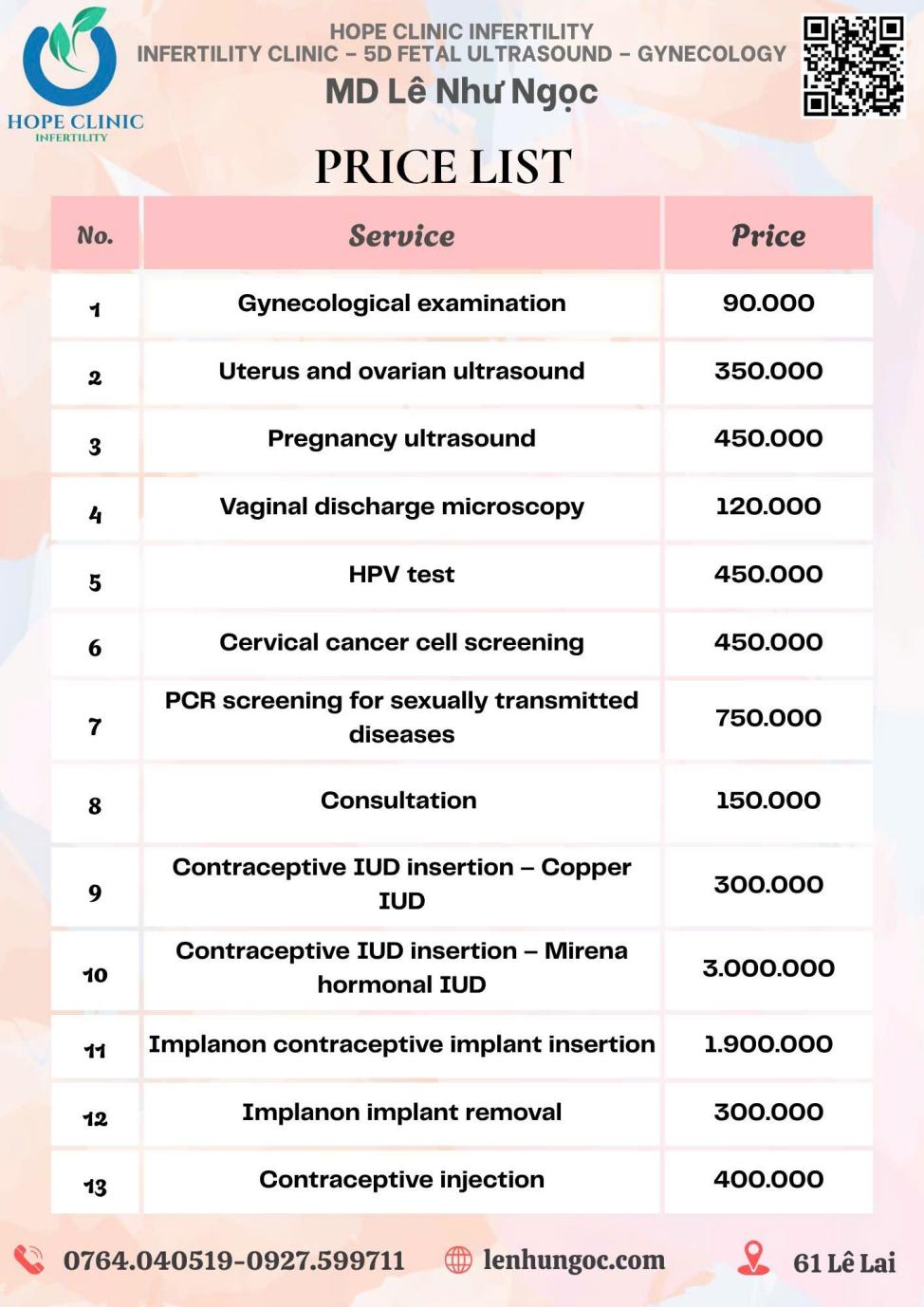
At Hope Clinic – Da Nang, M.Sc. Dr. Le Nhu Ngoc provides postpartum reproductive health consultations, assesses postpartum recovery, and helps women choose contraceptive methods that are appropriate for their health, individual needs, and future pregnancy plans.
The goal is to help each mother prevent unintended pregnancy, allow appropriate time for postpartum recovery, and prepare more effectively for her next pregnancy.
📍 Hope Clinic – M.Sc. Dr. Le Nhu Ngoc
Address: 61 Le Lai Street, Hai Chau District, Da Nang, Vietnam
☎️ Hotline/Zalo: 0764 040 519
🌐 Website: lenhungoc.com