CESAREAN SCAR DEFECT: WHAT IS IT? CAUSES, SIGNS, AND TREATMENT METHODS - DR LE NHU NGOC – 0764 040519
Many women after a C-section experience prolonged vaginal bleeding, dull lower abdominal pain, or difficulty conceiving again despite trying for a long time. Upon gynecological examination, the doctor concludes that they have a "cesarean scar defect" or "fluid accumulation at the old surgical scar."
ThS.BS Le NhuNgọc (Obstetrics, Gynecology & Infertility Specialist in Da Nang) has directly examined and surgically treated cesarean scar defects via laparoscopy for many women with this condition. The following article will help women correctly understand the medical nature of the disease, its impact on fertility, and effective treatment solutions available today.
What is a Cesarean Scar Defect?
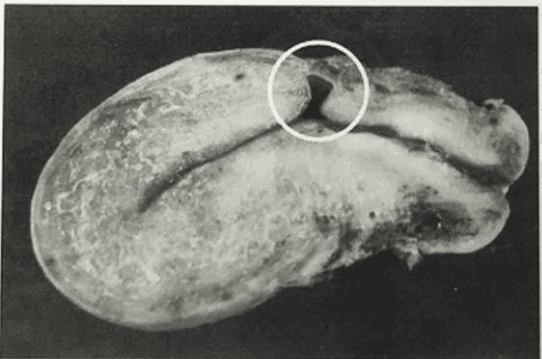
A cesarean scar defect (English: Cesarean Scar Defect - CSD, Isthmocele, or Uterine Niche) is a condition where the uterine muscle at the old C-section scar site does not heal completely, creating a depression or defect pocket at the scar location, usually in the uterine isthmus.
Because this indentation is located at the old incision site, uterine secretions and menstrual blood easily accumulate here instead of draining completely out. Patients often hear the ultrasound doctor describe it as "fluid collection at the old surgical scar" or "thinning of the uterine muscle at the scar."
The detection rate of scar defects varies quite widely across studies, depending on diagnostic methods, definition criteria, and the surveyed population of women. Some studies using gel/saline infusion sonography record a high detection rate. However, not everyone with a scar defect seen on imaging experiences symptoms.
Causes of Old C-Section Scar Defects
Scar defects form due to an interrupted or imperfect wound-healing process in the uterine muscle. The main risk factors include:
Number of C-sections: The rate of scar defects increases with the number of C-sections. Multiple C-sections are associated with a higher risk of scar defect formation.
Incision location and timing of surgery: C-sections performed when labor has advanced and lower uterine segment incisions may be associated with a higher risk of scar defect formation.
Surgical closure technique: The uterine closure technique: The method of repairing the uterus may be related to the formation and characteristics of the scar defect; however, the specific impact of each technique is still being studied.
Infection or complications at the surgical site: Certain complications such as infection or hematoma may affect scar healing, but evidence regarding the specific extent of this impact remains limited.
Retroverted uterus: Some studies note that a retroverted uterus may be associated with a higher risk of niche formation, though the exact extent and mechanism remain unclear.
Signs to Recognize a Cesarean Scar Defect
Many women are completely asymptomatic and only discover it accidentally during routine gynecological check-ups. However, if the following manifestations appear, women should have their old C-section scar checked:
Menorrhagia or spotting after menstruation: This is the most common symptom. Bleeding can persist for many days after the main period ends, often brown due to old blood and fluid trapped in the defect area.
Pelvic pain or pain during intercourse: Some women may experience pelvic pain or dyspareunia, but these symptoms are non-specific and can be caused by many other gynecological issues.
Secondary infertility: A history of previous pregnancy/childbirth, but currently encountering difficulty getting pregnant again.
4. How Does a Cesarean Scar Defect Affect Fertility and IVF?
This is the biggest concern for women trying to conceive or preparing for embryo transfer (IVF). Uterine scar defects negatively impact reproduction through several mechanisms:
Impairing Natural Conception
Cesarean scar defects may be related to difficulty conceiving in some women. One proposed mechanism is that the presence of fluid in the defect pocket can alter the environment inside the uterine cavity. However, the extent of the impact on natural conception in each individual is still not clearly determined.
Reducing Success Rates in IVF Embryo Transfer
For IVF patients, the presence of fluid in the uterine cavity is associated with poorer embryo transfer outcomes in several studies. If fluid is detected in the uterine cavity, the doctor will evaluate the cause, extent, and timing of the fluid appearance to consider management before embryo transfer, depending on each patient's specific condition.
Risks in Subsequent Pregnancies
Cesarean scar pregnancy: This is a condition where the pregnancy implants on or very close to the old C-section scar. This condition is distinct from a simple cesarean scar defect and can cause severe bleeding complications, especially as the pregnancy progresses.
Placenta previa and Placenta Accreta Spectrum (PAS): A history of C-section, especially when accompanied by placenta previa, increases the risk of PAS. PAS can involve abnormal invasion of the placenta into the uterine muscle and adjacent structures, including the bladder in deeply invasive forms.
Uterine dehiscence or rupture: Some studies suggest that a thin remaining myometrial thickness and large defect characteristics may be associated with the risk of uterine scar dehiscence or rupture in a subsequent pregnancy. However, there is currently no single RMT threshold that can be used to accurately predict risk for all patients.
5. Diagnostic Methods for Cesarean Scar Defects
Accurately diagnosing the morphology and depth of the scar defect helps doctors provide an appropriate management protocol.
Transvaginal Ultrasound (2D/3D): The initial screening method. Helps measure the dimensions of the defect pocket and the remaining myometrial thickness (RMT).
Saline Infusion Sonography (SIS): Can help visualize the morphology and severity of the scar defect more clearly, especially in cases where routine ultrasound does not provide a complete assessment.
Hysteroscopy: Can be used to directly observe the defect area from inside the uterine cavity, evaluating niche morphology, fibrous tissue, fluid retention, and vascularization at the scar site; it can also be combined with treatment in suitable cases.
Magnetic Resonance Imaging (MRI): Applied to complex cases requiring precise measurements prior to open surgery or abdominal laparoscopic repair.
RMT (Remaining Myometrial Thickness): The thickness of the remaining uterine muscle at the incision site.
RMT is one of the parameters used to assess the degree of uterine muscle thinning at the scar site. However, there is currently no single RMT threshold applicable to all patients to predict complication risks or decide the treatment method.
6. Current Treatment Methods for Cesarean Scar Defects
Not every case of scar defect requires surgery. The choice of method depends on: Clinical symptoms, remaining myometrial thickness (RMT), and the patient's fertility desires.
Doctor's Note: "Not every detected scar defect requires surgery. If the patient has no significant symptoms, no fluid in the uterine cavity, and no immediate pregnancy plans, the doctor may choose observation instead of intervention."
Examination and Treatment of Cesarean Scar Defects in Da Nang
If women living in Da Nang or the Central - Central Highlands region experience abnormal bleeding after a C-section or secondary infertility, visiting an Obstetrics, Gynecology, and Reproductive Support facility is extremely necessary.
Obstetrics, Gynecology & Infertility Clinic – ThS.BS Le Nhu Ngoc in Da Nang is a specialized center for examination, uterine lesion assessment, and infertility treatment.
Comprehensive Assessment: The doctor performs specialized ultrasound combined with saline infusion sonography (SIS) to accurately measure RMT indices and defect pocket volume.
Individualized Plan: Depending on whether you want to conceive naturally, prepare for IUI, or prepare for IVF embryo transfer, ThS.BS Le Nhu Ngoc will consider observation, addressing fluid in the uterine cavity, or scar repair intervention on a case-by-case basis.
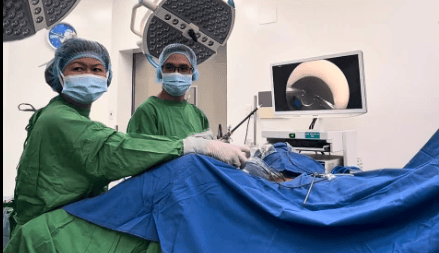
Direct Surgery: For cases indicated for scar repair surgery (hysteroscopy or laparoscopy), Dr. Ngoc directly consults and performs the surgery at a hospital with appropriate surgical conditions.
8. Frequently Asked Questions (FAQ)
Can a cesarean scar defect heal on its own?
No. A scar defect is a structural change at the old surgical scar site and should not be expected to disappear completely on its own over time. However, not every case requires treatment. If the scar defect causes no symptoms, has no significant fluid, and does not affect reproductive plans, the doctor may prescribe observation.
Can I do IVF if I have an old C-section scar defect?
You can definitely do IVF. However, if the defect pocket accumulates a lot of fluid that flows into the uterine cavity, the doctor may consider fluid aspiration or recommend scar repair surgery before embryo transfer to ensure the best environment for embryo implantation.
How long after scar repair surgery can I try to get pregnant again?
The timing for attempting pregnancy again depends on the surgical method, the extent of the defect, recovery status, and post-operative evaluation results. In some cases, the doctor may allow pregnancy once the uterus has fully recovered; for cases requiring uterine wall reconstruction, the waiting time may be longer. Patients should adhere to the timing for pregnancy or embryo transfer directly advised by their operating surgeon.
Is surgical repair of a cesarean scar defect painful?
The surgery is performed under general or local anesthesia at the hospital, so the patient feels no pain during the procedure. After surgery, patients may feel mild, dull pain in the lower abdomen for 1–2 days, which is well controlled with pain medication.
Is a C-section mandatory for a subsequent pregnancy if I have a uterine scar defect?
If you become pregnant after having a cesarean scar defect or after scar repair surgery, the pregnancy needs appropriate obstetric monitoring. The decision on the delivery method depends on many factors, including the condition of the uterine scar, surgical history, pregnancy progression, and the doctor's assessment.
Conclusion
Cesarean scar defect is a fairly common condition following a C-section and can be associated with post-menstrual abnormal bleeding, pelvic pain, or certain fertility issues in some women. Early detection through specialized ultrasound will help women receive timely management, protect their reproductive health, and best prepare for their next pregnancy.
📍HyVong Clinic – ThS.BS Le Nhu Ngoc
Address: 61 Le Lai, Hai Chau, Da Nang
☎️ Hotline/Zalo: 0764 040 519
🌐 Website: https://lenhungoc.com