After childbirth, a woman’s body goes through many changes involving hormones, the uterus, the vagina and perineum, breasts, physical health, and emotional well-being.
Many women think that once the baby is born, resting and taking care of the baby is enough. However, a postpartum checkup is an important part of the mother’s recovery and overall health care.
So, what does a postpartum checkup include? What will the doctor examine? When should you have a postpartum checkup, and what problems need to be evaluated?
Let’s explore what women need to know about postpartum health checks with M.Sc. Dr. Le Nhu Ngoc – Hope Clinic, Da Nang.
What Is a Postpartum Checkup?
A postpartum checkup is an assessment of a mother’s health after childbirth to determine how well her body is recovering and to identify any problems that may require treatment or follow-up.
The examination may vary from one woman to another depending on:
Vaginal or cesarean delivery.
How long it has been since childbirth.
Whether there was a perineal tear or episiotomy.
Whether complications occurred during pregnancy or delivery.
Whether significant postpartum bleeding occurred.
Breastfeeding status.
Current symptoms.
The mother’s medical history.
Therefore, a postpartum checkup is not exactly the same for every woman.
When Should You Have a Postpartum Checkup?
The timing of a postpartum checkup may be adjusted according to each woman’s condition.
Some women may need to be evaluated sooner if they experience:
Significant or worsening pain.
Abnormal vaginal bleeding.
Fever.
Unusual-smelling vaginal discharge.
Swelling, redness, pain, or discharge from a surgical incision or perineal wound.
Pelvic pain.
Difficulty urinating or painful urination.
Pain during intercourse.
Persistent sadness, anxiety, or feelings of being overwhelmed.
In addition to checking for acute problems, a postpartum visit allows the doctor to assess the mother’s recovery and provide guidance for maintaining her health in the months ahead.
What Will the Doctor Ask During a Postpartum Checkup?
Before the physical examination, the doctor will usually ask about the mother’s current health and childbirth experience.
Questions may include:
Did you have a vaginal or cesarean delivery?
When did you give birth?
Were there any complications during delivery?
Did you have a perineal tear or episiotomy?
Did you experience significant blood loss during delivery?
Are you still experiencing vaginal bleeding?
Do you have abdominal or pelvic pain?
How is your incision or perineal wound healing?
Are you breastfeeding?
Has your menstrual period returned?
Are you experiencing any urinary or bowel problems?
Do you have pain or discomfort during intercourse?
How are your mood, sleep, and energy levels?
This information helps the doctor determine which areas need to be examined and whether additional tests or an ultrasound may be necessary.
How Will the Doctor Check the Uterus and Pelvic Area?
After childbirth, the uterus needs time to contract and gradually return toward its pre-pregnancy state.
Depending on the individual situation, the doctor may assess:
Uterine involution.
Lower abdominal or pelvic pain.
Vaginal bleeding or postpartum discharge.
Signs that may suggest an infection.
The condition of the vagina and cervix when indicated.
If a woman has unusual symptoms, the doctor may recommend a pelvic ultrasound or other appropriate tests to determine the cause.
Not every woman needs all of these tests or an ultrasound after childbirth.
Will the Doctor Check the Perineal Stitches or Cesarean Incision?
Possibly, depending on the individual situation.
If a woman had a vaginal delivery with a perineal tear or episiotomy, the doctor may check:
Whether the wound is healing properly.
Whether there is swelling, redness, or infection.
Whether persistent pain is present.
Whether there are any abnormalities involving the perineal area.
After a cesarean delivery, the doctor may assess:
The surgical incision.
Swelling, redness, or pain.
Signs of infection.
The healing process.
If the incision or wound appears abnormal, women should not self-treat at home and should have it evaluated by a doctor.
Does a Postpartum Checkup Include an Assessment of the Pelvic Floor?
It may, especially when a woman has pelvic floor-related symptoms.
Pregnancy and childbirth can affect the pelvic floor muscles.
Some women may experience:
Urinary leakage when coughing, sneezing, or exercising.
A feeling of heaviness or pressure in the pelvic area.
Difficulty controlling bowel movements.
Pain during intercourse.
Changes in vaginal sensation after childbirth.
When necessary, the doctor may assess pelvic floor function and recommend pelvic floor exercises or other appropriate rehabilitation approaches.
Not every woman needs pelvic floor treatment after childbirth, but persistent symptoms should not be ignored.
Does a Postpartum Checkup Include Vaginal and Sexual Health?
It may, especially if the mother is experiencing symptoms.
After childbirth and during breastfeeding, hormonal changes can affect the vaginal area.
Some women may experience:
Vaginal dryness.
Pain during intercourse.
Discomfort during intercourse.
Reduced sexual desire.
Anxiety or fear of pain when resuming sexual activity.
These issues are relatively common, but that does not mean women have to live with them long-term.
A doctor can evaluate the possible causes and recommend appropriate treatment depending on the woman’s health status and whether she is breastfeeding.
Will the Doctor Check Menstruation and Hormonal Health After Childbirth?
Possibly.
The timing of the return of menstruation after childbirth varies from woman to woman.
Breastfeeding, in particular, can affect when menstrual periods return.
Therefore, not having a period for some time after childbirth does not necessarily mean that something is wrong.
However, a doctor may evaluate the situation if the mother has:
Abnormal bleeding.
Prolonged or unusually heavy periods.
Concerning changes in the menstrual cycle.
Symptoms suggesting a hormonal disorder.
Uncertainty about whether she may be pregnant again.
Not every woman needs hormone testing after childbirth.
Does a Postpartum Checkup Include Breast and Breastfeeding Assessment?
It may, particularly if the mother is experiencing breast or breastfeeding-related problems.
The doctor may ask about:
Breast pain.
Breast fullness or engorgement.
Blocked milk ducts.
Redness or swelling of the breast.
Fever.
Difficulties with breastfeeding.
Unusual changes in the breasts.
If abnormal symptoms are identified, the doctor may perform further assessment and recommend appropriate tests when necessary.
Is Mental Health Also Assessed During a Postpartum Checkup?
Yes. This is an important part of postpartum care that is sometimes overlooked.
After childbirth, mothers may experience changes in emotions, sleep, and mental well-being.
Possible symptoms include:
Persistent fatigue.
Difficulty sleeping.
Irritability.
Excessive anxiety.
Feelings of sadness.
Feeling overwhelmed by caring for the baby.
Difficulty feeling happy or comfortable as before.
Not every emotional change after childbirth means that a woman has postpartum depression. However, if these symptoms persist, become more severe, or interfere with the mother’s ability to care for herself or her baby, she should be evaluated by a healthcare professional.
Will Blood Pressure and Other Health Problems Be Checked After Childbirth?
Depending on the individual situation, the doctor may check:
Blood pressure.
Body weight.
Signs of anemia.
Medical conditions that existed before pregnancy.
Complications during pregnancy or childbirth.
Current medications and supplements.
In particular, women who experienced gestational hypertension or preeclampsia may require appropriate postpartum health monitoring.
A postpartum checkup is not only about examining the reproductive organs. It is also an opportunity to assess the mother’s overall health.
Does a Postpartum Checkup Require Many Tests?
No.
Not every woman needs blood tests, ultrasound, or extensive examinations after childbirth.
The doctor will consider:
Pregnancy and delivery history.
Current symptoms.
Physical examination findings.
Underlying medical conditions.
Individual risk factors.
The doctor can then determine whether additional laboratory tests or imaging studies are necessary.
The goal of a postpartum checkup is not to perform as many tests as possible, but to choose the examinations that are genuinely appropriate for each woman.
When Should You Seek Medical Care Soon After Childbirth?
Women should seek medical attention promptly if they experience:
Heavy or abnormal vaginal bleeding.
Fever.
Increasing abdominal or pelvic pain.
Unusual-smelling postpartum discharge.
Swelling, redness, pain, or discharge from a surgical incision or wound.
Severe headache or blurred vision.
Difficulty breathing or chest pain.
Unusual swelling or pain in a leg.
Painful urination or difficulty urinating.
Persistent pain during intercourse.
Urinary leakage or problems controlling bowel movements.
Persistent sadness, anxiety, or feelings of hopelessness.
Some postpartum symptoms may require urgent medical evaluation, so women should not simply try to tolerate them or treat themselves at home.
Frequently Asked Questions About Postpartum Checkups
Does a postpartum checkup always require a gynecological examination?
Not every woman needs exactly the same gynecological examination. The doctor will determine what is appropriate based on the timing after childbirth, symptoms, and individual condition.
Do women who had a cesarean section need a postpartum checkup?
Yes. Women who have had a cesarean delivery still need follow-up to assess recovery, particularly the surgical incision and other postpartum health concerns.
Do I need to see a doctor if my period has not returned after childbirth?
The absence of menstruation for some time can be normal, particularly in breastfeeding women. However, if you have unusual symptoms or concerns about becoming pregnant again, you should consult a doctor.
Is pain during intercourse normal after childbirth?
Pain during intercourse can occur after childbirth for several reasons, including perineal stitches, pelvic floor changes, vaginal dryness, or hormonal changes. If the problem persists, you should see a doctor to identify the cause and receive appropriate advice.
Do I need hormone testing after childbirth?
Not every woman needs hormone testing after childbirth. A doctor may recommend hormone tests only when symptoms and the overall health assessment indicate that they are necessary.
Postpartum Health Consultation With M.Sc. Dr. Le Nhu Ngoc
After childbirth, a woman’s body needs time to recover in terms of physical health, hormonal balance, pelvic health, and emotional well-being.
A postpartum checkup is not simply about examining the uterus or checking stitches. It is an opportunity for the doctor to comprehensively assess the mother’s recovery, identify potential problems early, and provide appropriate guidance for her ongoing health.
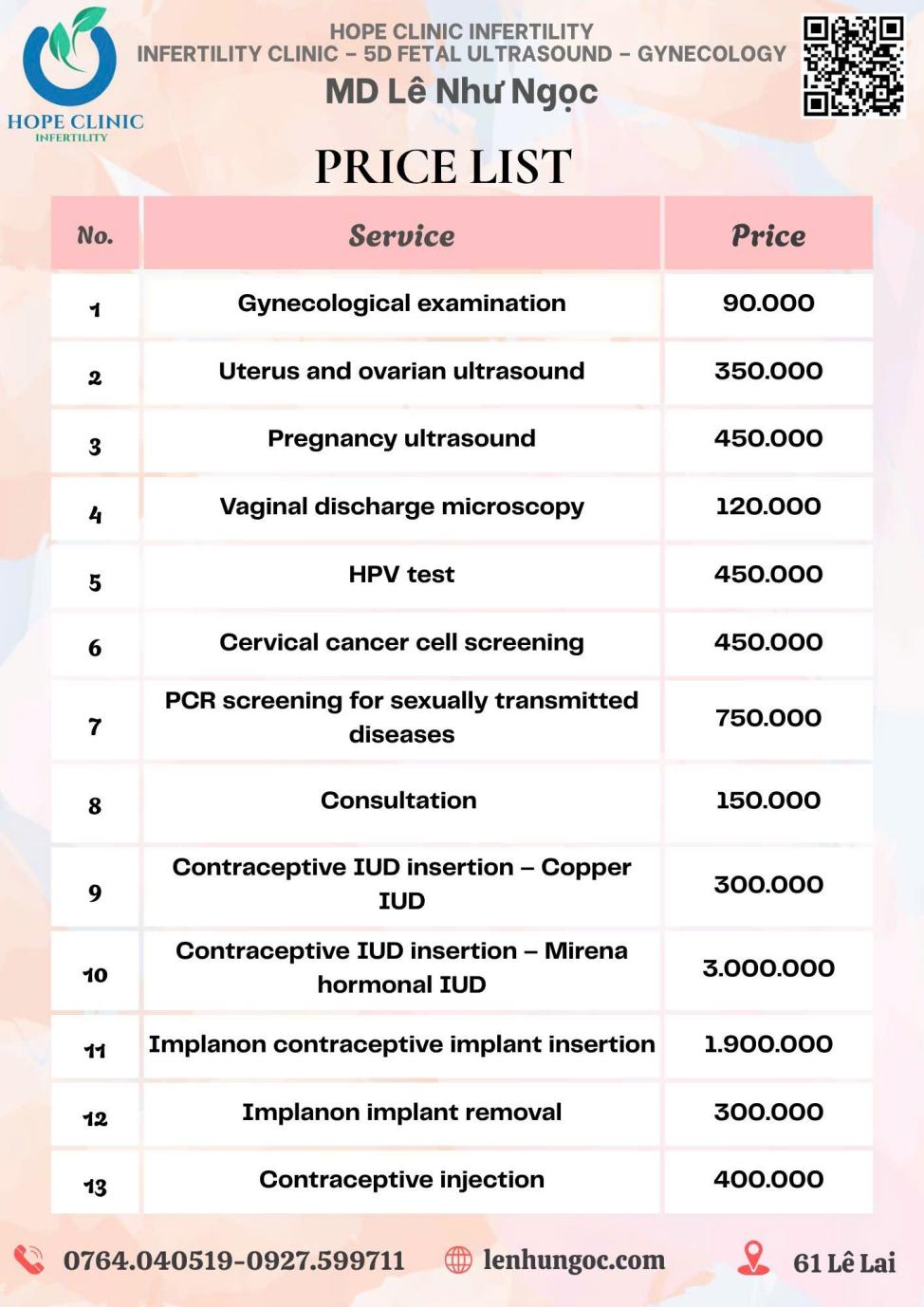
At Hope Clinic – Da Nang, M.Sc. Dr. Le Nhu Ngoc provides postpartum health consultations and examinations, assessing recovery, gynecological health, pelvic floor function, hormonal health, sexual health, and other postpartum concerns based on each woman’s individual condition.
The goal is to help mothers understand postpartum changes, identify problems that may require treatment early, and recover their health safely and appropriately.
📍 Hope Clinic – M.Sc. Dr. Le Nhu Ngoc
Address: 61 Le Lai Street, Hai Chau District, Da Nang, Vietnam
☎️ Hotline/Zalo: 0764 040 519
🌐 Website: lenhungoc.com